
Compression therapy in South Austin, the easy part
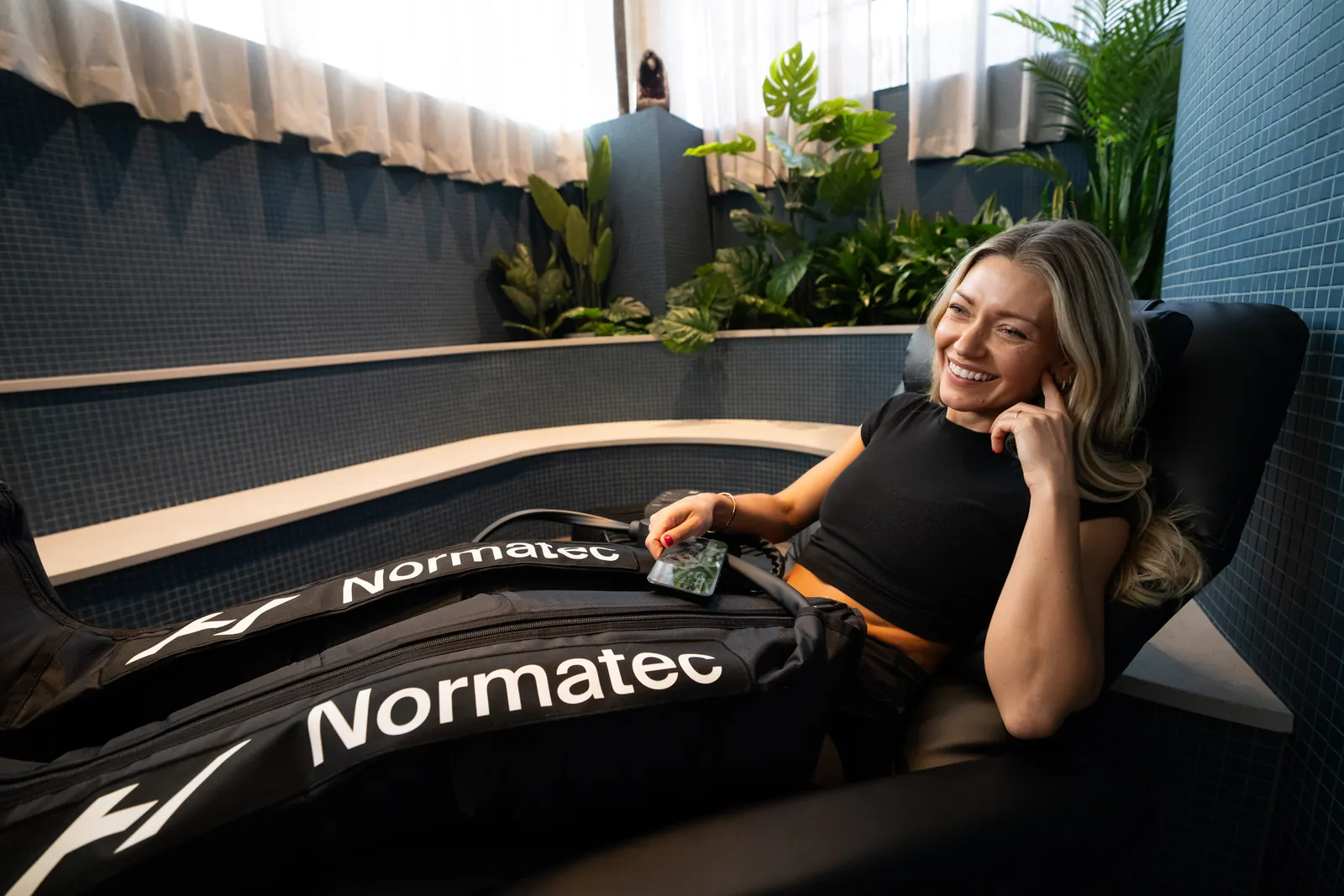
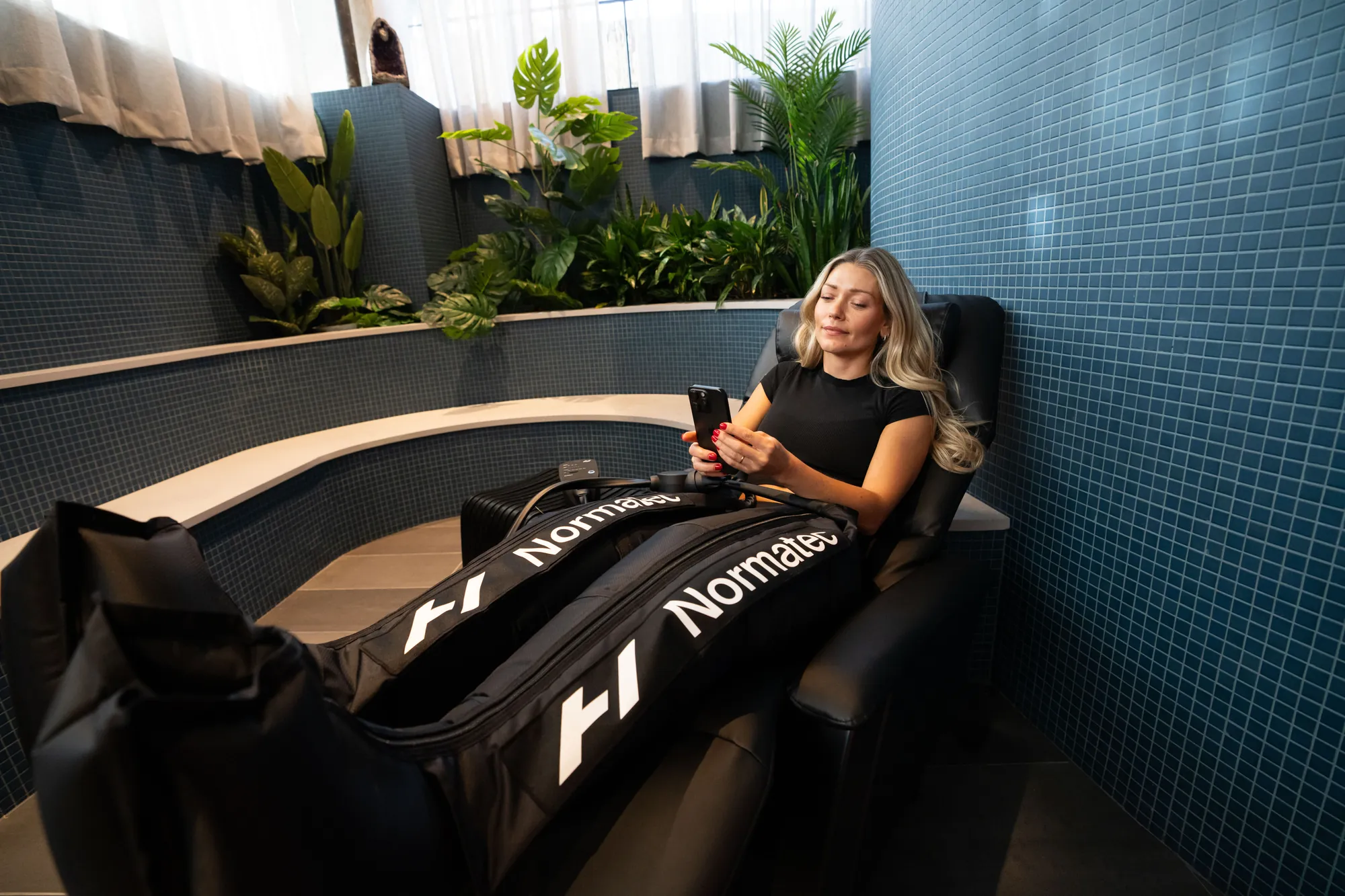
Sleeves on your legs, a chair, the lights low. It's the last step of the protocol, and the one we'd tell you never to skip.
What does compression therapy do?
How it works
A firm, moving squeeze that works up the leg and back down, rather than one constant pressure.
Where it sits
It's the last step of the protocol, the quiet part after the sauna and the plunges.
On its own
Plenty of people book the lounge by itself, especially after a long day on their feet or a flight.
Compression therapy is a set of sleeves that inflate in stages up your legs, then let go. You sit in the compression lounge with the lights low, and there's nothing to do. It's the last step of the protocol, the least demanding thing in the building, and the one people cut when they're running late. Please don't.

Why we'd never skip it
Everything we run works best as a habit, and a habit is only as strong as its easiest step. This is the easiest step. There's no cold to talk yourself into and no heat to sit through, so it's the part people keep doing even on the weeks they skip the plunge.
That's not a study, it's what we see, and we'd rather label it as ours.
Does it actually do anything?
For soreness after hard exercise, yes. In a review of 121 trials, compression beat doing nothing at all, and a 2024 review of 17 studies found compression boots mainly help people feel less sore after exercise. In a study of 24 Olympic-level athletes, 15 minutes in the boots eased muscle tenderness for the rest of their training day. The full picture is here.
When to book it
| Coming in for | Book compression |
|---|---|
| The full sequence | Last, as part of the protocol |
| A long flight or a long drive | On its own |
| A week that's run you down | On its own, whenever you need it |
| One stubborn spot | Probably not. Massage therapy is the better call |
Want another easy add-on? Red light asks nothing of you either, and the cold plunge is right there if you're feeling brave.
Who should ask a doctor first
This is the one service here where the question really matters, so we ask before your first session. If you've had blood clots or deep vein thrombosis, you have a circulation, vascular or heart condition, an open wound or a recent leg injury, or you're pregnant, talk to your doctor before you book. We're a recovery studio, and we're not the right people to clear you. Tell whoever's on the floor either way.
Your first time
Say so when you book, and someone will set the sleeves up with you.
Book a session, or read the questions people ask us.
Generator is a recovery studio, not a medical provider. Nothing here diagnoses or treats a condition, and it isn't a substitute for advice from your own clinician. If you have a circulation disorder, a blood clot history, or a heart condition, talk to your doctor before using compression.
Compression questions, answered
What does it feel like?
A firm squeeze that moves up the leg and back down. Most people find it relaxing, and plenty nod off.
Does compression actually work?
For soreness after hard exercise, yes. A 2024 review of 17 studies found boots like ours mainly help people feel less sore after exercise, and in a study of Olympic-level athletes, 15 minutes eased muscle tenderness for the rest of their training day. The details are on our evidence page.
Can I do just this?
Yes. It's a service on its own, not only the last step of the protocol. Book it on its own and pick your time.
Is it good after a flight or a long drive?
Lots of people book it for exactly that. Sitting still for hours is hard on your legs, and this is the easiest thing in the building to add.
Is it safe for everyone?
Not everyone. If you've had blood clots, or you have a circulation or heart condition, a leg injury or you're pregnant, talk to your doctor before you book.
Ready to put your feet up?
Pick your time and book it here, or book the whole Protocol.