
Infrared sauna in South Austin, warm not punishing
Thirty minutes in a cedar-lined, full-spectrum cabin that runs cooler than a hot-rock sauna. Come on your own or bring someone.
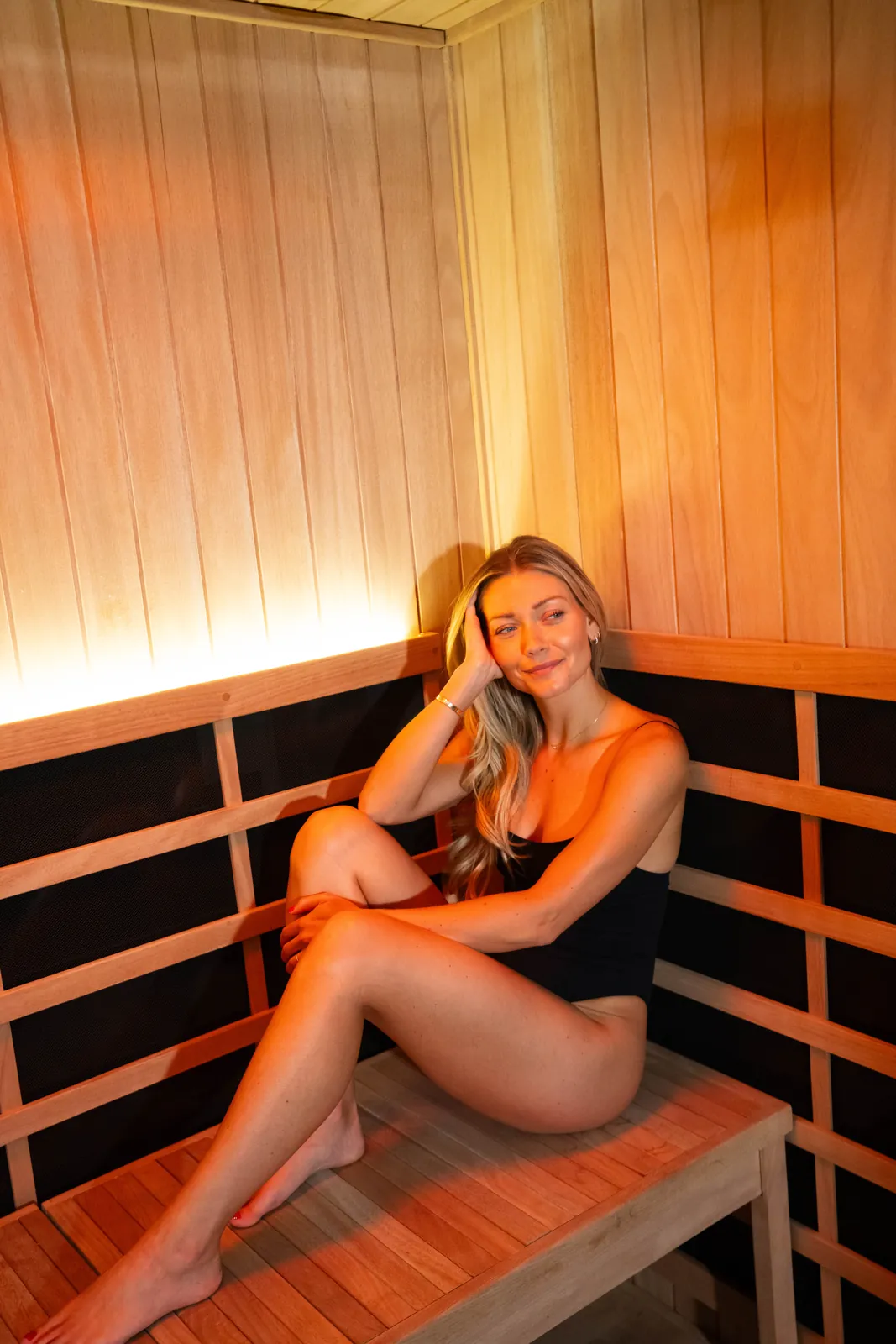
What is an infrared sauna?
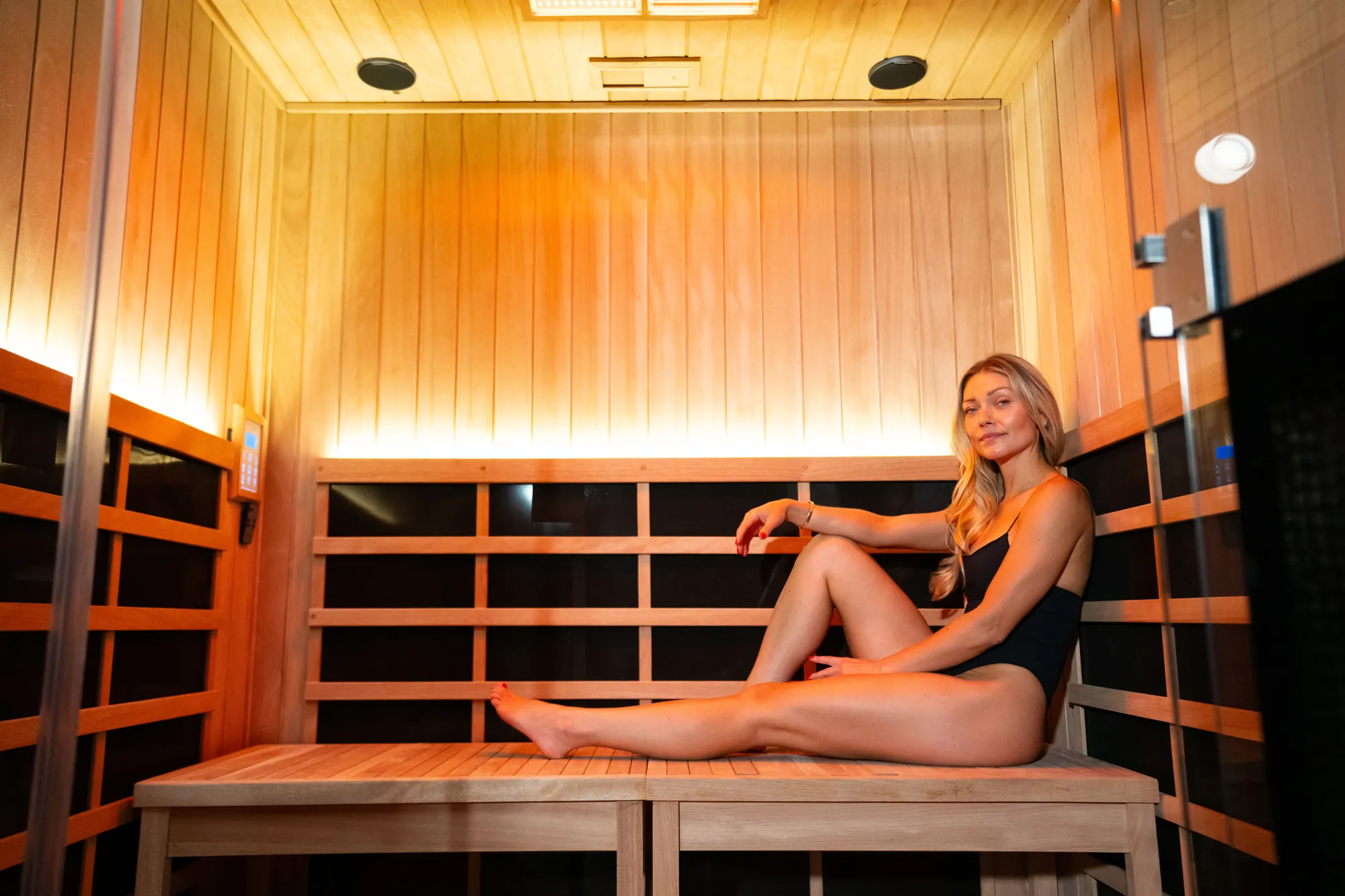
Infrared heat
Infrared heats you directly rather than heating the air around you, so the cabin runs cooler than a traditional sauna.
What you feel
You'll sweat. You won't feel like you're being cooked, which is why people who've bounced off a hot rock sauna get on with this one.
Where it sits
Most people use it as step one of the protocol, because heat first gets your blood vessels open before the cold. It's lovely on its own, too.
An infrared sauna warms your body directly instead of heating the air around you. That's the whole difference, and it's why our cabin runs cooler than a traditional sauna while you still sweat properly. It's cedar-lined, full-spectrum, and it seats more than one.

What is it actually like?
Warm, not punishing. If you've tried a hot-rock sauna and hated it, give this one a go. The air is cooler, so you can settle in and stay for the full thirty minutes.
You'll sweat. It takes a few minutes to get going, and then it doesn't stop. Bring water.
The cabin has chromotherapy too, the coloured light people ask about. Dr. Jess asked "healing or hooey?" about it back in 2019, starting from the fact that there's a lot of misinformation about it. Her piece is here.
Where it sits in a visit
Heat first. That's why the sauna is step one of the protocol. Warmth opens your blood vessels (vasodilation), so the cold plunge has something to work with.
Plenty of people book the sauna on its own and never touch the water. That's completely fine. If you want the quietest possible add-on afterwards, the compression lounge is it.
What does the research say?
Most people come in to warm through and loosen up before the plunges, and that's exactly what we use it for: the heat that starts every Protocol. The research on infrared saunas is still small, so we keep our promises small too. Here's what the studies looked at, and what they found.
Your first time
Say so when you book, and bring someone if you like. Towels and everything else are here.
Book a session, or read the questions people ask us.
Generator is a recovery studio, not a medical provider. Nothing here diagnoses or treats a condition, and it isn't a substitute for advice from your own clinician.
Sauna questions, answered
Is infrared different from a regular sauna?
Yes. Infrared warms you directly instead of heating the air, so the cabin runs cooler and most people find they can sit in it longer.
How long is a session?
Thirty minutes on its own. If it's part of the protocol, we'll time it so you go straight into the plunges afterwards.
How hot does it get?
Cooler than a traditional sauna, and warm enough to sweat properly. We don't publish a number for the cabin yet, and we'd rather say so than guess.
What is chromotherapy?
Chromotherapy, or light therapy, is the use of visible light in the colour spectrum, where each colour has a different wavelength. Our cabin has it. Dr. Jess wrote about it back in 2019, starting from the fact that there's a lot of misinformation about chromotherapy. Her full piece is on our blog.
Can I bring someone?
Yes. The cabin seats more than one. Just tell us when you book.
Is there research behind infrared sauna?
Yes. In a randomised study of athletes, 20 minutes of infrared sauna after training reduced soreness and improved how recovered they felt, and in a small trial of mildly depressed patients, four weeks of far-infrared sessions improved relaxation. The long-term sauna research from Finland is on our evidence page too.